
Retirement, identity and the man who doesn’t know who he is without work
For decades the answer to ‘who are you?’ was simple.. Then it ended. The question turned out to be much larger than expected.
For decades, the answer to who are you was simple. You were what you did. The role, the title, the function… these were not just what you did but who you were. The structure of work provided not only income and purpose but identity itself, and a set of relationships, and a reason to get up, and a place in the world that felt earned and solid… but then it ended.
Retirement is supposed to be a reward. Freedom. The years you worked towards…. for or some people it is exactly that… a genuine liberation, an expansion into a life that was waiting For many high-achieving men, particularly those for whom work was the primary organising principle of their identity, it is something closer to a crisis. A sudden and disorienting loss of the self they knew how to be.
The parts that work built
In IFS terms, what happens in these men when work ends is that the parts which were organised around professional identity the competent part, the authoritative part, the part that led and decided and was deferred to suddenly have no context in which to function. And without that context, something deeper and more uncomfortable surfaces.
The parts that work was keeping at bay. The uncertainty. The questions about meaning and value that busyness never had to answer. The sense, sometimes arriving for the first time, that the interior life so long managed and contained is rather empty. Or rather: that it was never properly inhabited in the first place.
This can manifest in various ways. Depression, often unrecognised as such. Irritability. A sudden and bewildering loss of confidence in domains that have nothing to do with work. Increased drinking. Withdrawal from the partner who has been waiting for years for more of him and now finds that what has arrived is not presence but a kind of demanding vacancy.
The question underneath
What retirement asks of these men and what they are rarely prepared for is the question that work was answering on their behalf: who are you, really, when the role is stripped away?
This is not a comfortable question. For men formed in the ways many of these men were formed — in environments that valued function over feeling, capability over vulnerability, doing over being it can feel like an abyss.
IFS offers a way of approaching that question that is neither philosophical nor abstract. It gets practical, and personal, and specific. It asks: which parts of you have been running the show? What were they protecting? What has never been given space to develop? And who might you be, at this stage of life, if some of those protective parts could finally stand down?
The answers, in my experience, tend to surprise. Beneath the competent, controlled, professional exterior there are usually parts that have been waiting a long time for permission to rest, to play, to connect, to be curious without agenda, to be a person rather than a function.
Retirement, met with the right support, is not an ending. It is an unusually clear invitation to become, perhaps for the first time, someone you actually chose to be.
That is work worth doing. And it is never too late to begin.
Jonathan Edwards is an IFS therapist and psychotherapist, Graduate Member of the British Psychological Society, based in Bloomsbury, London and Stroud, Gloucestershire. He works with men navigating major life transitions, identity, and the inner world.

Fathers and Sons — The Patterns That Pass Down Without Words
What fathers pass to sons is rarely spoken, instead its absorbed. By the time you notice it, its been running for years.
The things fathers pass to sons are rarely spoken. They are demonstrated. Absorbed. Learned in the gaps between what was said and what was felt, in the texture of a man's presence or absence, in what he did when things got difficult and what he did when they didn't.
By the time a son is old enough to examine the inheritance, it has usually been running for decades. It feels, by then, less like something received and more like something innate just the way he is, just the way men are. IFS gently, persistently, disagrees.
My father played the piano
My father was a pharmacist. A gentle, intelligent man who retreated, in the way that men of his generation often did, into his own interior world. He would play the piano for hours beautifully, privately, in a way that communicated both his richness and his distance. He was in the room and not in the room simultaneously.
I grew up in a large rectory, surrounded by nature, the youngest of three brothers. It was a good childhood in many ways spacious, beautiful, full of the kind of freedom that rural England offered to boys in those years. But the emotional template being laid down quietly, without drama, through the daily reality of a father whose inner world was not available for sharing was forming me in ways I wouldn't begin to understand for a very long time.
I became, in various ways, my father's son. Not through any decision, but through absorption. The tendency often towards withdrawal. The preference for the interior over the expressed. The way that music, or nature, or solitude could feel safer than intimacy. The belief, running beneath everything, that one's inner world was essentially a private affair.
What passes between fathers and sons
In IFS terms, what happens across generations is the transmission of parts and burdens. A father who carries unexpressed grief passes to his son not the grief itself but a template a way of managing grief, a set of protective parts that learned to keep it contained. The son develops his own versions of those parts, adapted to his own context, without ever knowing quite where they came from.
This is not destiny. But it requires more than awareness to interrupt. Awareness tells you the pattern exists. IFS helps you meet the parts that are carrying it in yourself, and in some sense in the lineage behind you — and to begin the work of unburdening them.
The son who becomes the father
What makes this work particularly urgent, in my experience, is what happens when the son becomes a father himself. The patterns that were absorbed are now being transmitted. The withdrawal, the emotional unavailability, the preference for order and competence over mess and feeling these become the template for the next generation.
Many of the men I work with come to therapy not because they are suffering in ways they can name but because they can see, with increasing clarity, what their children are experiencing. A daughter who has stopped trying to reach them. A son who is angry in ways that feel uncomfortably familiar. A family that has quietly organised itself around one man's unavailability.
The U-turn is the moment of turning inward rather than outward, of taking responsibility for one's own part in the dynamic rather than reacting to everyone else's is where this work begins. It is not easy. For men formed as many of these men were formed, turning towards the inner world rather than away from it runs counter to everything they were taught.
But the alternative …continuing to transmit what was received, watching the distance replicate itself in the next generation … is, for most of them, no longer acceptable.
The pattern can stop. Not through willpower or good intentions, but through genuine inner work. That is what IFS makes possible.
And it is, in my experience, some of the most important work a man can do.
Jonathan Edwards is an IFS therapist and psychotherapist, Graduate Member of the British Psychological Society, based in Bloomsbury, London and Stroud, Gloucestershire.

What Boarding School really costs.. The emotional bill that arrives decades later
The bill from boarding school rarely arrives immediately. For many it arrives decades later and with considerable ‘interest’.
ItIt was, for many who attended, the making of them. The friendships, the structure, the independence developed young, the particular pride of having survived something demanding. These things are real and should not be dismissed.
But there is another story — less often told, more often felt — about what the boarding school experience costs. Not immediately, necessarily. Often not for decades. But eventually, and sometimes with considerable force, the bill arrives.
Whatever the intentions behind it — and they are usually loving, or at least well-meaning — being sent to boarding school at seven, or eight, or nine years old involves a rupture. A child who needs its parents is separated from them, placed in an environment that requires rapid self-sufficiency, and given very little space to grieve that transition.
The grief doesn't disappear. It goes underground. The child adapts — children are extraordinarily good at adapting — and builds a version of themselves that can function in the new environment. Capable. Sociable, often. Self-contained. Able to manage without showing need.
These adaptations are impressive and, in the context of boarding school, entirely necessary. They are also, in many cases, the beginning of a lifelong pattern of emotional unavailability — not to others only, but to oneself.
In my clinical work in London, working with professionals of a certain generation and formation, the boarding school legacy appears with striking regularity. It surfaces in the patterns — the difficulty sustaining genuine intimacy, the tendency towards withdrawal under emotional pressure, the deep discomfort with vulnerability that has been so thoroughly managed it barely registers as discomfort anymore.
It surfaces in the relationship with addiction the particular prevalence of alcohol and substance problems in this demographic is not coincidental. When the capacity for emotional self-regulation was never properly developed because the environment that should have developed it was removed, the system finds other ways to regulate.
It surfaces in the relationship with children particularly children who are allowed, even encouraged, to name their emotional needs. For a parent whose own childhood offered none of these things, a child's emotional expressiveness can feel not just unfamiliar but threatening.
The Parts Boarding School Builds
What IFS offers, in this context, is a map. A way of understanding not just that the boarding school experience left its mark, but precisely how — in the specific protective parts that were forged in those early years of institutional life. For those who lived it, these parts will be recognisable.
1. The Early-Competent One Having to be the parentified child — growing up too quickly.
What it protects against: Dependency, chaos, being seen as 'too much.'
Gifts: people experience you as steady, capable, reliable. You handle complexity with ease. You rarely feel overwhelmed.
2. The Self-Sufficient One Needs were met institutionally and not relationally.
What it protects against: Longing, disappointment, unmet attachment needs.
Gifts: Strong boundaries. Respect for autonomy. Non-intrusive presence.
3. The Emotional Container Manager Big feelings had to be managed privately, quietly, or efficiently.
What it protects against: Social consequences, shame, loss of belonging.
Gifts You help people co regulate.. you stay calm in high-affect moments.
4. The Social Adapter Belonging depended on reading the room accurately.
What it protects against: Bullying, rejection, isolation, invisibility.
Gifts: Strong attunement. You intuit relational dynamics quickly people feel seen and heard.
5. The Achiever-Oriented Organiser Success created safety, praise, or stability.
What it protects against: Uncertainty, failure, loss of worth.
Gifts : Strong conceptualisation Commitment to growth.
6. The Low-Need / Invisible One Attention went to those who stood out — or acted out.
What it protects against: Disappointment, neglect, emotional exposure.
Gifts: You don't take up too much space. You centre clients easily. You rarely demand recognition.
7. The Attachment-Regulator Relationships were intense and time-limited.
What it protects against: Loss, grief, longing.
Gifts . Strong frame. Awareness of boundaries.
8. The Moral / Rule-Following One Institutions reward compliance and clarity.
What it protects against: Punishment, unpredictability.
Gifts Ethical consistency. Respect for structure. Reliability.
IFS offers a particular kind of access to the boarding school legacy because it works with parts — and the parts formed in those early years of separation are often still very young, very isolated, and very much in need of acknowledgment.
The eight-year-old who learned not to cry on the first night of term. The boy who discovered that need, expressed, brought not comfort but contempt. The young person who built a carapace of capability around a core of loneliness that has never really been addressed.
These parts are not gone. They are waiting. And meeting them carefully, at their own pace, with a therapist who has some personal knowledge of what early emotional self-sufficiency actually costs can begin a process of healing that logic and willpower alone have never been able to reach.
This is not about blame. Boarding school is what it is, and many parents who sent their children there were themselves sent, and knew no other model. The work is not about attributing fault. It is about understanding what happened, what it cost, and what might, at last, be different.
Further Reading and Workshops
For those who want to go deeper into this territory, two names stand out. Nick Duffell's work particularly his concept of the 'Strategic Survival Personality' remains the most thorough examination of what boarding school does to the developing self, and his workshops offer an experiential route into this material that reading alone cannot provide. Joy Schaverien's research into what she termed 'Boarding School Syndrome' gives the clinical and psychological dimensions of this experience the serious academic grounding they deserve. Both are essential reading for anyone working in this area — as a client, as a therapist, or simply as someone trying to make sense of their own history.
Duffell, N. — The Making of Them: The British Attitude to Children and the Boarding School System. Lone Arrow Press.
Schaverien, J. — Boarding School Syndrome: The Psychological Trauma of the 'Privileged' Child. Routledge.
Jonathan Edwards is an IFS therapist and psychotherapist, Graduate Member of the British Psychological Society, based in Bloomsbury, London and Stroud, Gloucestershire.

High Functioning and Exhausted - When Success masks Complex Trauma
You function exceptionally well. Beneath that functioning, something has been waiting a very long time to be felt.
You function well. By most measures, you function exceptionally well. You meet your commitments, maintain your relationships, show up for your work. From the outside and often from the inside too you look like someone who has got it together Yet there is a persistent undercurrent. A tiredness that sleep doesn't touch. A sense of bracing, of waiting for something to go wrong. An inability to fully relax that has become so familiar you've stopped noticing it. A feeling, in the quieter moments, that the person doing all this functioning is somehow not quite you. I’d like to say this… this is not weakness or ingratitude. In many cases, it is the fingerprint of complex trauma operating invisibly beneath a life that looks, from the surface, entirely intact.
What complex trauma looks like in high achievers
Complex PTSD — CPTSD — tends to develop not from a single overwhelming event but from prolonged or repeated experiences, particularly in childhood or in relationships where there was a significant power imbalance. What makes it particularly difficult to identify in high-functioning people is that the adaptations that allowed them to survive those experiences are often the same ones that made them successful.
The hypervigilance that made childhood feel manageable becomes, in adult life, an extraordinary attention to detail and an ability to read rooms. The self-sufficiency that was necessary when attunement was unavailable becomes professional capability and apparent resilience. The disconnection from inner experience that protected against unbearable feeling becomes an impressive capacity to perform under pressure.
These are not failures. They are the system working exactly as it was designed to work. The cost is that the underlying experience.. the pain, the fear, the grief, the shame has never been processed. It has been managed, contained, worked around, but managing something is not the same as healing it.
Early experiences and their long reach
There are things in my own history that I don't speak about often early experiences that took a long time to acknowledge even to myself, let alone to address therapeutically. What I can say is that the gap between how I appeared to function and what I was actually carrying was considerable, for longer than I care to admit. The work of closing that gap slowly, carefully, with good therapeutic support has been the most important work of my life. I share this not to centre my own experience but because I think it matters, when working in this area, that a therapist knows this territory from the inside. Not just from the literature, but from having lived in it.
What helps
IFS is particularly well suited to working with complex trauma in high-functioning people because it does not require the direct revisiting of traumatic material. It works instead by building a relationship with the parts of the system that are carrying the trauma approaching them at their own pace, with curiosity and compassion, in a way that feels manageable rather than overwhelming.
The high-functioning person who has spent decades managing their inner world rather than inhabiting it often finds, in this process, that the exhaustion begins to lift. Not because the history changes, it really doesn't, but because the system no longer has to work so hard to keep it contained.
What becomes available, as that happens, is something that has often been missing for a very long time. A sense of being genuinely present in one's own life. Of not just functioning, but actually being here. That is not a small thing. For many people it is the thing they didn't know they were missing until they began to find it.
Jonathan Edwards is an IFS therapist and psychotherapist, Graduate Member of the British Psychological Society, based in Bloomsbury, London and Stroud, Gloucestershire.

Managers and Firefighters - understanding the logic of your own defences
The drinking, the rage, the withdrawal… these parts aren’t failures of character. They’re hard working parts valiantly trying to do a job to keep you safe in some way.
One of the most quietly revolutionary things about Internal Family Systems (IFS) is the way it reframes the parts of us we like least! The procrastination. The rage that arrives from nowhere. The drinking, the checking, the compulsive busyness. The withdrawal. The part that eats when it isn't hungry, or works when it should rest, or picks a fight at the exact moment connection was becoming possible.
Most therapeutic approaches and most of our own internal narratives treat these as problems to be solved. Symptoms to be managed. Failures of character or discipline to be overcome.
IFS says something different. It says these parts have a logic. They developed for reasons and they are trying to help us.. and understanding those reasons, rather than simply trying to eliminate the behaviour, is where genuine change begins.
Managers and firefighters
In the IFS model, the protective parts of the system fall into two broad groups.
Managers are the proactive protectors.. the parts that run the day-to-day operation of keeping things under control. The inner critic that keeps you effortful and self-improving. The people-pleaser that maintains harmony at its own expense. The workaholic that ensures you are too busy to feel. The controller that imposes order on environments that feel threatening. These parts are working constantly, often invisibly, to prevent the exiled parts the ones carrying pain, shame, or vulnerability from surfacing.
Firefighters are the reactive protectors… the parts that activate when the managers' control breaks down and a tender feeling … an exile.. threatens to overwhelm the system. They are less subtle than managers and considerably more alarming. Binge drinking. Rage. Dissociation. Compulsive sexual behaviour. Self-harm. The firefighter's only priority is to put out the fire to extinguish the feeling, by whatever means necessary, as quickly as possible. Consequences are not its concern. Relief is.
Why this is important to get..
Understanding that our moves are protective rather than pathological changes the therapeutic conversation entirely. Rather than asking why do I keep doing this in a tone of despair or self-condemnation, we can begin to ask what is this part protecting, and what is it protecting it from? That is a question that leads somewhere. Because when you understand what the firefighter is extinguishing, you can begin to work with the exile it is protecting. And hen the exile receives what it actually needs acknowledgment, understanding, the experience of not being alone with what it carries the firefighter begins to relax.
In my own life, I have had a close acquaintance with firefighters. Parts that found highly effective, and highly costly, ways of managing what I wasn't able to feel directly. Understanding them not condemning them, not simply trying to stop them, but genuinely getting curious about what they were carrying has been some of the most important work of my adult life.
The invitation
The next time a part of you does something you'd rather it hadn't reaches for the drink, withdraws from the conversation, loses its temper, disappears into the screen try, if you can, a moment of curiosity before the judgment arrives.
What is this part doing? What is it trying to protect? What might it be that it doesn't want you to feel?
You don't have to answer those questions alone. But asking them is the beginning of a very different relationship with yourself.
Jonathan Edwards is an IFS therapist and psychotherapist, Graduate Member of the British Psychological Society, based in Bloomsbury, London and Stroud, Gloucestershire.

Why Successful Men are Lonely
Full diary… full life? Something essential is missing. This isn’t weakness, it’s a portal and invitation to look again.
It is one of the least-spoken-about epidemics of our time. Men… seemingly capable, accomplished, outwardly functional men, who are, beneath the surface, profoundly alone. Not alone in the obvious sense, necessarily. Many of them have partners, families, colleagues, full diaries. The loneliness is of a different order.. an interior loneliness, a sense of fundamental unreachability, a gap between the self that is presented to the world and whatever lies beneath it that has quietly become unbridgeable.
This is not weakness. It is, in most cases, the logical outcome of a particular formation.. a way of becoming a man that was entirely coherent in its context and has simply, over time, extracted a very high price.
How it develops
Boys learn early. They learn what is acceptable and what is not, what earns approval and what invites contempt, what it means to be a man worth respecting. In many environments and particularly in the boarding school culture that shaped so many professional men of a certain generation what they learn is that need is weakness, vulnerability is dangerous, and the interior life is something to be managed rather than inhabited.
I grew up as the youngest of three brothers, in a household where a certain kind of emotional self-sufficiency was modelled rather than taught. My father, a man I loved and still think about with tenderness, retreated, in the way many men of his generation did, into his own world. Hours at the piano. A kind of beautiful, melancholy distance. He was present and absent simultaneously, in the way that withdrawing men often are.
I learned from that, as children do. I learned that inner worlds were private places, not shared ones. That you managed what you felt rather than expressed it. That connection happened at the surface and the depths were your own business.
It took me a long time to understand what that had cost me and longer still to begin to do something about it.
The architecture of male loneliness
In IFS terms, what happens in these formative years is that the vulnerable parts, the ones that need connection, attunement, genuine closeness become exiles. They are pushed inward, protected by managers whose job is to ensure they never surface in a way that might invite rejection or ridicule.
The result is a man who is genuinely capable of intimacy at the intellectual level engaging, interesting, even charming but who cannot quite close the last distance. Who keeps, without meaning to, something back. Who finds, when he is honest with himself in the quiet moments, that he cannot remember the last time he felt truly known.
The loneliness this produces is compounded by its own invisibility. Successful men are not supposed to be lonely. They have everything, by most measures. Naming the loneliness feels like ingratitude, or weakness, or both. So it stays unnamed. And the distance grows.
What changes it
What I have seen, again and again in clinical work, is that the turning point for these men is rarely dramatic. It is quieter than that. A moment of recognition in a therapy room, or sometimes in a conversation that catches them off guard that the distance they have maintained so efficiently is not protecting them. It is costing them. Their marriage. Their relationship with their children. Their own interior life.
The work of IFS, in this context, is to begin to develop a relationship with the exiled parts the ones that have been waiting, sometimes for decades, for it to be safe enough to be felt. This is slow work. It asks for patience and a willingness to sit with discomfort. It is also, in my experience, some of the most rewarding work a man can do… what he finds, when he turns towards those parts, is not the chaos he feared. He finds a person. Someone who has been there all along, waiting to be known.
And from that knowing, connection real connection, not the managed approximation of itbecomes possible again.
Jonathan Edwards is an IFS therapist and psychotherapist, Graduate Member of the British Psychological Society, based in Bloomsbury, London and Stroud, Gloucestershire.

Why willpower doesn’t work and what does
You’ve made the decision more than once. You’re doing it this time. Here’s why that’s not the problem.
There is a particular kind of exhaustion that comes from trying to be better through sheer force of will. I’ve been there! You know what you should do. You've known for some time. You've made the decision, more than once .. the serious one, the real one, the one that felt different this time, yet here you are again, in the same place, wondering what is wrong with you that you cannot simply do the thing you have decided to do. I would like to say to you… Nothing is wrong with you… but willpower, as a strategy, is working against the grain of how the mind actually functions. Understanding why is the first step towards something that actually works.
The limits of willpower
Willpower operates from the top down from the rational, deciding, consciously-intending part of you. And that part is genuinely capable. It can make plans, set goals, construct strategies. What it cannot do, on its own, is override the parts of you that have much older, much more urgent agendas.
The part that drinks, or uses, or engages in the compulsive behaviour, is not irrational. It is doing something that works in the short term, in the way it has always worked to relieve something the system finds unbearable. Pressure. Pain. The particular silence that arrives at the end of a long week. The social anxiety that a glass of wine has been managing, quietly and efficiently, for twenty years.
When willpower says stop, that part hears a threat. And threatened parts do not quietly comply. They wait. They find a way around. They surface at the moment of greatest vulnerability and remind the system, with considerable force, exactly why they exist.
What I know from the inside
I struggled with addiction through my teens and twenties. I got clean — eventually, with the help of a twelve-step programme that gave me something I hadn't been able to give myself: a community, a structure, and the beginning of an honest relationship with what I was actually carrying.
What twelve steps gave me was essential. What IFS has added, decades later, is understanding. The ability to look at the parts that drove the addiction to see what they were protecting, what they needed, what they had been carrying since long before the drinking began and to develop a relationship with them that willpower alone could never have reached. I am not unique in this. It is the story I hear, in different forms, from almost every client I work with in this area.
What actually works
IFS approaches addiction not as a battle to be won but as a conversation to be had. The addictive part is not the enemy.. it is a part with a history, a logic, and a function that made complete sense in the context in which it developed. The question is not how to defeat it but meet it with curiosity, asking around what it is carrying, and what it actually needs.
When that question is asked with genuine curiosity so when the part feels heard rather than attacke something remarkable often happens. The grip loosens. Not immediately, and not without support. But the compulsion, met with compassion rather than combat, begins to lose some of its power.
This is not a soft option. It asks for more honesty, more courage, and more sustained attention than willpower does. But it works with the grain of how the mind actually functions rather than against it. And the changes it produces tend to last — because they come from understanding rather than suppression.
If you have been trying harder for long enough, something different might be worth considering.
Jonathan Edwards is an IFS therapist and psychotherapist, Graduate Member of the British Psychological Society, based in Bloomsbury, London and Stroud, Gloucestershire. He has personal experience of addiction and recovery.

You Inner Critic is not the Enemy
The voice that won’t stop isn’t your enemy: its a protector that hasn’t heard that the danger has gone, mistakes are human and you’re actually ok"
Most people who come to therapy have, at some point, tried to silence that voice. The one that says you're not enough. That you handled that badly. That other people have got it together in ways you fundamentally haven't. The voice that arrives, unbidden, in the small hours or sometimes in the middle of a perfectly good day and reminds you of everything you'd rather not think about. We all try ignoring it. Arguing with it. Drowning it out with work, or wine, or the particular exhaustion of keeping very busy. Sometimes we try being kind to ourselves, in the way we've been told we should and find, to our frustration, that the voice simply gets louder. There is a reason for that. And understanding it changes everything.
The critic as protector
Internal Family Systems (IFS) invites us to do something counterintuitive rather than fighting the inner critic, to get curious about it. To ask not how do I shut this down but what is this part actually trying to do?
Because in IFS, the inner critic is understood not as an enemy but as a protector. One thats actually trying to help! A part that learned, usually very early, that if it could find your flaws before anyone else did if it could keep you small, keep you effortful, keep you perpetually improving it might be able to keep you safe. From rejection. From failure. From the particular pain of being seen and found wanting.
The critic is trying to help.. badly, often painfully, in ways that cause enormous suffering but trying to help nonetheless.
When we understand that, something shifts. The critic becomes less terrifying and more poignant. It becomes, in the language of IFS, a part we can begin to have a relationship with rather than a force we are simply at the mercy of.
What the critic is protecting
Beneath most inner critics, in my experience, is an exile a younger tender part, an inner child, carrying something the system decided was too painful or too dangerous to feel directly. Shame, usually. A deep belief, formed long ago, that there is something fundamentally wrong with you. The critic's job is to make sure that part never gets close enough to the surface to be felt — because the system decided, somewhere along the way, that feeling it would be unbearable.
In my own life I recognise this pattern well. A critic that developed early, that learned to scan for inadequacy with considerable efficiency, that spent decades doing its job with exhausting thoroughness. It took me a long time and a great deal of therapy, including my own regular IFS work since 2020 to begin to understand what it was protecting, and what it actually needed.
What it needed was not to be defeated. It needed to be thanked genuinely, for its vigilance by my core Self.. and then gently relieved of a job it had been doing alone for far too long.
A different relationship
This is the invitation IFS extends. Not to eliminate the critic which is neither possible nor, it turns out, desirable but to develop a relationship with it. To hear what it has to say with curiosity rather than dread. To understand what it is carrying and what lies beneath it. And gradually, as that understanding deepens, to find that the voice loses some of its authority. Not because it has been silenced, but because it no longer needs to shout.
The critic, met with genuine compassion, often has something surprisingly useful to say. It knows you intimately. It has been paying close attention for a very long time. The question is whether it is leading or whether something calmer and wiser can begin to take the wheel.
That calmer, wiser something is what IFS calls Self. And learning to access it, even briefly, even imperfectly, changes the quality of the inner life in ways that are difficult to describe and impossible to unfeel.
If the voice in your head has been running things for long enough, it might be time for a different conversation.
Jonathan Edwards is an IFS therapist and psychotherapist, Graduate Member of the British Psychological Society, based in Bloomsbury, London and Stroud, Gloucestershire.

Addiction Is Not the Problem: An IFS Approach to Addictive Processes
Addiction is not the problem. It’s a response.. and what it’s responding to is where the real work begins.
There is a moment that many people who struggle with addiction will recognise. The moment just before. When something shifts internally a pressure, a pull, a sense of inevitability and the part of you that drinks, uses, gambles, or disappears into a screen takes over. It feels, in that moment, less like a choice and more like a tide coming in.
Most addiction treatment focuses on the tide. On stopping the behaviour, managing the craving, building resistance. This is necessary. But it is rarely sufficient. Because the tide, in my experience, is never really the problem. The tide is a response. And what it is responding to is the work.
What IFS understands about addiction
Internal Family Systems therapy, developed by Dr Richard Schwartz and expanded into the field of addiction by the brilliant clinician Cece Sykes, offers a fundamentally different frame. Rather than viewing addictive behaviour as a disease to be managed or a weakness to be overcome, IFS understands it as the activity of a part a part that discovered, at some point, that this particular substance or behaviour worked. That it relieved something. Numbed something. Provided something that felt, however briefly, like what was missing.
Cece Sykes, whose work with the IFS Institute has been transformative for practitioners working in this field, describes these as manager and firefighter parts parts of the system that are doing their best to protect the person from unbearable pain, shame, or vulnerability. The drinking manager that keeps social anxiety at bay. The cocaine firefighter that obliterates the silence after a difficult week. The pornography that provides a simulacrum of intimacy when the real thing feels too frightening or too far away.
The behaviour, in other words, is not the enemy. It is a messenger. And the question IFS asks is not how do we stop this but what is this part carrying, and what does it actually need?
Boarding school and the roots of addictive process
In my work with clients in London many of them high-functioning professionals with a particular kind of English formation one pattern appears with striking regularity. The boarding school experience.
Sent away young, often at seven or eight years old, these clients learned early that need was dangerous. That vulnerability was weakness. That the way to survive in an environment that offered little attunement and less tenderness was to disconnect from the parts of themselves that needed comfort, closeness, and care. They became, in the language of IFS, highly exiled their most vulnerable parts locked away, heavily guarded by managers and firefighters whose job was to ensure those parts never surfaced.
Addiction, in this context, is not surprising. It is logical. When the exile cannot be felt, and the managers are exhausted, the firefighters take over. And in a culture that normalises heavy drinking, that celebrates excess, and that treats emotional unavailability as sophistication, the addictive process can run for decades before anyone names it.
The work
What IFS offers these clients is something most of them have never experienced the chance to turn towards the exiled parts rather than away from them. To meet, with curiosity and compassion, the young parts that were sent away not just to school, but inward, into a place of carefully maintained unreachability.
This is not dramatic work, necessarily. It does not require reliving or re-narrating. It requires presence, patience, and a therapeutic relationship in which the client experiences, perhaps for the first time, that their vulnerability does not destroy things. That a part of them can be known and still be safe.
When that begins to happen when the exile receives what it always needed the firefighter parts begin to relax. Not immediately, and not without support. But the grip loosens. The tide begins to turn on its own.
I have had the privilege of working with people in this process for many years, and it remains one of the most moving aspects of clinical work — watching someone begin to reclaim parts of themselves they had believed lost, or had never known existed.
A note on working in London
London has a particular relationship with addiction. The pace, the pressure, the culture of performance and excess — and the extraordinary loneliness that can exist in one of the world's most densely populated cities. I work with clients in Bloomsbury who carry all of this, and more. Many of them have tried other approaches. Many of them are tired of fighting themselves.
If that is where you are, IFS may offer something different. Not a battle, but a conversation. Not willpower, but understanding.
Jonathan Edwards is an IFS psychotherapist based in Bloomsbury, London and Stroud, Gloucestershire. His work is informed by the IFS Institute and the clinical work of Cece Sykes.

The Man in the Fortress: IFS and the Hidden Struggle of High-Achieving Men in a World They No Longer Recognise
He’s built a good life, he’s capable, defended and deeply alone. Somewhere beneath this fortress a person is waiting ..
He is, by most measures, a success. He has built things .. a career, a family, a life with substance and structure. He has navigated difficulty before and come through it. He is not, he would tell you, someone who needs help, yet something is wrong.
He finds himself increasingly at odds with the world around him. The pace of change feels not just rapid but threatening. His children speak a language he doesn't recognise diagnoses, boundaries, emotional needs stated plainly and without apology. His partner wants something from him that he cannot quite locate in himself. He looks at the culture around him and feels, somewhere beneath the irritation, profoundly lost.
So he does what he has always done. He withdraws. He controls what he can. He becomes, without quite meaning to, a man in a fortress — defended, capable, and deeply alone.
A particular formation
In my work with men in London, I encounter this pattern with striking regularity. And while it takes many forms, there is often a common thread running beneath it — a particular kind of formation. Boarding school. Or its emotional equivalent — an early environment in which self-sufficiency was not just valued but required, in which need was weakness, vulnerability was dangerous, and the way to be safe was to be competent, controlled, and self-contained.
These men learned young. They learned that the world had rules, that the rules mattered, and that those who followed them were rewarded with status, belonging, and a sense of order. They built themselves around this understanding. And for a long time — perhaps for decades — it worked.
What is happening now is that the world has changed the rules. Or rather, it has revealed that the rules were always more fragile than they appeared. The certainties are dissolving. The hierarchies are being questioned. The children are being told — rightly, for the most part — that their inner worlds matter, that their neurodivergence is real, that they don't have to perform wellbeing they don't feel.
And for the man who built his entire architecture on a different set of truths, this is not just inconvenient. It is existentially threatening.
What the parts are doing
In IFS, we would understand this man's response as the activity of parts — protective parts doing exactly what they were trained to do. The manager that enforces order and control, that cannot tolerate ambiguity, that doubles down on structure when the ground feels uncertain. The critic that turns on the children's diagnoses, the partner's requests, the culture's apparent softness — because if those things are valid, then what does that mean for everything he built himself on? The withdrawing part that retreats into work, or silence, or a kind of cold functionality that keeps everyone at a safe distance.
These parts are not villains. They are veterans. They learned their strategies in conditions that required them, and they have been faithfully applying those strategies ever since. The problem is not that they exist. The problem is that they are running the show in circumstances they were never designed for — and the cost is mounting.
The cost is in his marriage. In his relationship with his children, who are pulling away from a father they experience as critical, rigid, or simply absent. In his own interior life, which has become so heavily managed that he can barely access it. In a creeping sense — rarely named, often denied — that he has somehow missed something essential. That beneath the fortress there is a person he has not met in a very long time.
The U-turn
In IFS, there is a concept I return to again and again with clients like this.. the U-turn. The moment when, instead of looking outward at everything that is wrong with the world, the children, the culture, the partner — a man turns inward. Towards himself. Towards the parts that are driving the reaction. Towards the question of what is actually happening inside.
This is not a natural movement for men formed as these men were formed. It feels, initially, like weakness. Like capitulation. Like becoming something they were taught to disdain.
What it actually is, in my experience, is the most courageous thing they ever do.
Because what they find, when they turn inward, is not chaos. It is not the abyss they feared. What they find, beneath the managers and the firefighters and the carefully maintained competence, are younger parts — parts that were sent away, or shut down, or told in a hundred explicit and implicit ways that they were not acceptable. Parts that have been waiting, sometimes for half a century, to be acknowledged.
Terry Real, whose Relational Life Therapy informs my work alongside IFS, speaks about the moment when grandiosity the inflated, defended, superior position collapses into its shadow: shame. The man who has been holding himself above the chaos suddenly finds himself beneath it. Inadequate. Irrelevant. Left behind.
The therapeutic work is in neither position. It is in the ground between in relational health, in presence. Breathing down from grandiosity, and up from shame.. In the capacity to be a person among people. Flawed, feeling, connected. Not above the world and not crushed by it. Perfectly imperfect like all of us.
Coming out of the fortress
This work is slow. It asks for things that do not come easily to men formed in this way: patience, self-compassion, a willingness to be uncertain. It asks them to name the parts that have been running silently for decades, to see the strategies that once protected them and now isolate them, and to begin carefully, at their own pace to let those strategies be known rather than acted out.
What happens when they do is remarkable. Not immediately, and not without difficulty. But the withdrawal begins to soften. The control loosens its grip. The family, which had been quietly organising itself around his unavailability, begins to feel his presence again. And the man himself — often to his own considerable surprise — begins to feel something he may not have felt since childhood.
That he is not alone. That he does not have to be.
If you recognise yourself in any of this or if you recognise someone you love I would be glad to have a conversation.
Jonathan Edwards is an IFS Level 3 therapist and psychotherapist based in Bloomsbury, London and Stroud, Gloucestershire. He works with men navigating identity, relational disconnection, and the parts formed in early life that are no longer serving them. His work is informed by the IFS Institute and Relational Life Therapy.
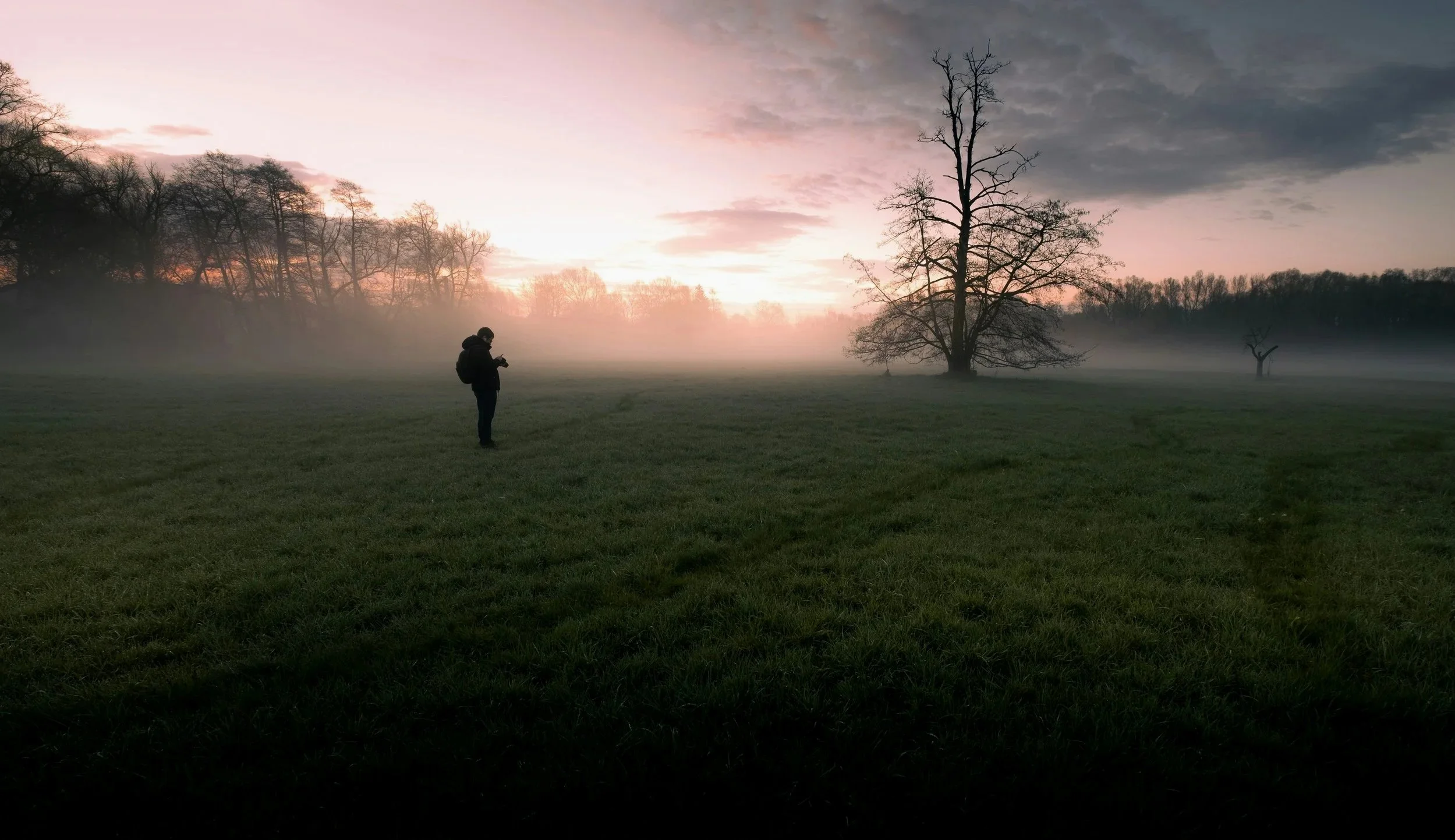
Finding Yourself in the Noise: IFS, Family, Work and Letting Go of Who You Were Told to Be
Most of us inherit a version of ourselves long before we have any say in the matter. IFS offers us a way to finally choose.
There is a particular kind of exhaustion that comes not from doing too much, but from being someone you were never quite meant to be, never wanted to be.
Most of us inherit a version of ourselves long before we have any say in the matter. A role in the family like the capable one, the peacekeeper, the one who doesn't make a fuss. A set of expectations about work so what success looks like, how hard you must push, what happens if you stop. A story about who you are and what you deserve. These inheritances can be subtle, even loving in their origins. But over time, living inside them can feel like wearing a coat that was made for someone else.
Internal Family Systems therapy calls these inherited patterns legacy burdens .. beliefs and ways of being that were passed down through families, cultures, or institutions, and taken on by parts of us long before we had the capacity to question them. They are not our fault. But they are, often, our work.
In the family
Family systems are remarkably efficient at assigning roles. Someone becomes the responsible one. Someone becomes the difficult one. Someone learns to disappear. These roles are usually adaptive as Terry Real of RLT might say, they helped the system function, kept the peace, maintained some version of connection. But they have a cost.
In my experience working with clients over many years, some of the most persistent suffering I encounter is in people who are still, decades later, playing a role that was assigned to them in childhood. The high-achieving adult who cannot rest because somewhere inside them a younger part is still trying to prove their worth. The person who cannot hold a boundary without enormous guilt because a part of them learned early that their needs were dangerous. The one who keeps finding themselves in the same relational dynamics because the family template is the only map they have.
IFS offers a way to meet these parts — with curiosity rather than judgment — and to begin the work of unburdening them. Not by discarding your history, but by relating to it differently.
In the workplace
Work is where many of these patterns play out with particular intensity. The drive to perform, to be indispensable, to never quite feel like enough — these are rarely about work itself. They are older stories, activated by new circumstances.
In these uncertain times — economic instability, rapid change, the erosion of structures that once felt permanent — those older patterns are under more pressure than ever. Parts of us that learned to manage uncertainty by working harder, controlling more, or withdrawing entirely are being stretched to their limits.
What IFS offers here is not a productivity framework or a resilience technique. It is something more fundamental — the chance to understand which parts of you are driving your relationship with work, what they are afraid of, and what they actually need. When that understanding deepens, something shifts. Not just in how you work, but in how you experience yourself in relation to work.
Letting go of who you were told to be
There is a concept in IFS called Self — the calm, curious, compassionate core that exists in every person, beneath and behind the parts. It is not something you have to create or earn. It is already there. The work is in clearing enough space for it to lead.
When people begin to shed the legacy burdens — the inherited beliefs about who they must be, what they must achieve, how much they must give — something remarkable often happens. Not chaos, as many fear, but a quiet clarification. A sense of recognising themselves. Of being, perhaps for the first time, someone they actually chose to be.
This is not easy work. It asks for courage, for patience, and for a willingness to sit with uncertainty — which is, of course, exactly what these times are demanding of us anyway. But it is work that has lasting consequences. For how you show up in your family. For how you inhabit your working life. And for who you are when all the roles and expectations are set aside.
If any of this resonates — if you find yourself wondering whose life you are actually living — I'd be glad to have a conversation.
Jonathan Edwards is an IFS therapist (L3) psychotherapist based in Bloomsbury, London and Stroud, Gloucestershire. He works with individuals on identity, relational patterns, addiction, and trauma.